THE READING ROOM
三个月后,她从第二段唱起
轮完三个月晚班,苇青带着旧谱夹回到社区合唱团。两声钢琴、一支短铅笔,帮她找回开口的时机。一篇关于中断后重新开始的原创双语随笔。
Coming In on the Second Verse
本篇原创感悟
隔了很久再回来,可以从今天唱得出的那一句开始。
Original reflection
When you come back after a long absence, begin with the line you can sing today.
门外的五分钟 / Five minutes outside the door
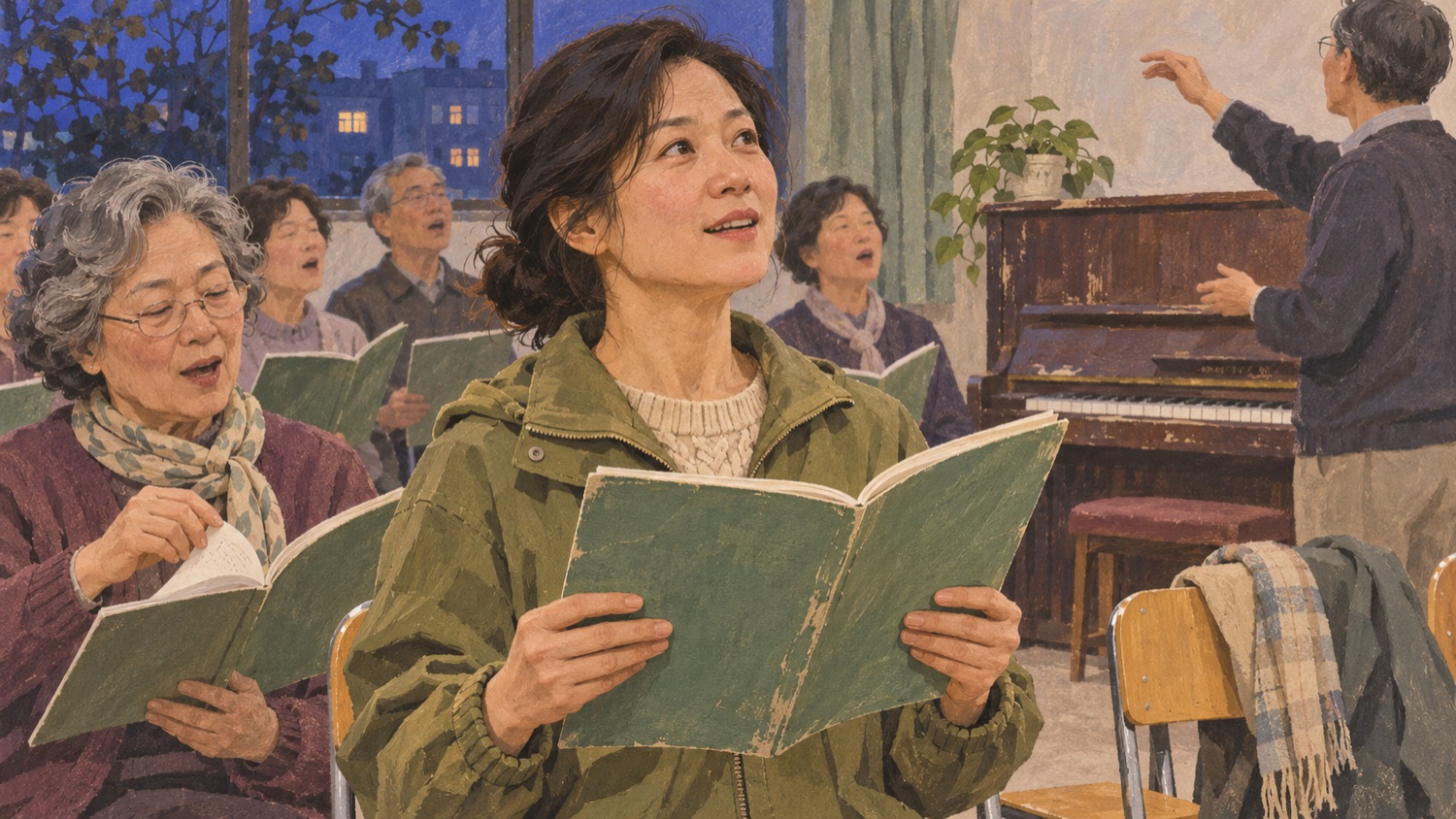
周四傍晚,苇青在活动室门外站了五分钟。三个月前,她调去上晚班,把合唱团的绿谱夹收进了柜子。如今班次换回来了,她也照旧提前十分钟到,却在听见钢琴声时停下了脚。谱夹的透明口袋里还塞着夏天的排练单,门缝底下透出来的,已经是这年入冬后的灯光。
On Thursday evening, Weiqing stood outside the rehearsal room for five minutes. Three months earlier, a switch to evening shifts had sent her green choir folder back into the cupboard. Now her shifts had changed again. She arrived ten minutes early, as usual, and stopped at the sound of the piano. A summer rehearsal sheet was still tucked in the clear pocket. Beyond the door, the lights were on against the early winter dark.
隔着门,她听得出谁在弹琴,还听见老许搬凳子时那一声惯常的叹气。曲子却完全陌生。她本来打算进门就坐回老位置,现在倒有点希望谁先出来接杯水,好让自己跟着进去。她甚至想等到下周,把落下的曲子练熟了再来,随后才想起,自己连他们在唱哪一首都还不知道。
Through the door, she recognized the pianist’s touch and Old Xu’s familiar sigh as he moved a chair. The tune was new to her. She had meant to walk straight back to her usual place. Now she wished someone would come out for water so she could follow them in. Perhaps she could learn the music and return next week. Then she remembered she didn’t even know which song they were singing.
开门的是团里管谱子的梅姨。苇青准备了半天的解释,到嘴边只剩一句,“我今天能跟哪一段?”梅姨从一摞纸里抽出两页,抹平折角递给她。“先坐我旁边。听一遍,第二段跟我一起进。”苇青把旧排练单往夹层里推了推,新谱正好放得下。
Auntie Mei, who looked after the scores, opened the door. Weiqing had been rehearsing an explanation. All that came out was, “Which part could I join in on today?” Mei drew two sheets from a pile, smoothed a folded corner and handed them over. “Sit beside me. Listen once, then come in with me on the second verse.” Weiqing slid the summer sheet farther into the pocket and made room for the new pages.
在谱上画一个圈 / A pencil circle on the score
第一遍,苇青把谱翻到了第二页,眼睛追着一行行音符跑。她刚认出自己的旋律,大家已经唱过去了。梅姨递来一支短铅笔,指了指上一行的末尾。原来轮到她们之前,钢琴会单独弹两下。苇青在那两下旁边画了个圈。这回,她终于知道应该在什么时候抬起头来。
The first time through, Weiqing turned to page two and chased the notes down the page. By the time she recognized her melody, the choir had gone past it. Mei handed her a stubby pencil and pointed to the end of the line above. The piano played two notes on its own just before their entrance. Weiqing circled them. Now she knew when to look up.
再来一遍时,她听见了那两下琴音,也看见指挥的手轻轻一抬。她唱出了第一句,声音小得只够自己听见。下一句的字挤在一起,她漏了两个,索性停下来听,到下一行又跟上了。坐在她旁边的梅姨一直稳稳唱着,唱到换气的地方,还像从前一样踮了一下脚跟。
On the next run, she heard those two piano notes and saw the conductor’s hand rise. She sang the first line just loud enough to hear herself. The words crowded together in the next one. She missed two, listened for a moment and joined in again on the following line. Mei sang steadily beside her, lifting her heels a little as she took a breath, just as she always had.
假如你也正准备回到一件中断过的事里,可以先问一个容易回答的问题。落了几次课,就问下次讨论读到哪一页。离开项目一阵子,就问眼下大家正在改哪一份稿。把得到的回答记在日历上,给第一次到场找一个具体的起点。余下要补的功课,等看过现在的进度,再一项项安排。
If you’re returning to something after a break, ask a question someone can answer readily. After a few missed classes, ask which page the next discussion starts on. Returning to a project, ask which draft the team is revising. Put the answer on your calendar so you know where to begin when you arrive. Once you’ve seen where things stand, you can decide what to catch up on.
给下个周四留个记号 / A note for next Thursday
休息时,有人问起工厂的晚班,苇青讲了件小事。以前每到周四,她在车间吃饭时总会看一眼钟,想着合唱团该开始热嗓子了。说到这里,她才发觉自己记挂这群人已经很久了。梅姨拧上水杯盖,说她们最近换了热身曲,下次早点来就能听见。两个人边说边把凳子挪回原处。
At the break someone asked about the evening shift at the factory. Weiqing remembered glancing at the clock over supper on Thursdays and thinking that the choir must be warming up. Saying it aloud, she realized how long she had missed these people. Mei screwed the lid back on her cup. They had changed their warm-up tune recently, she said. Come early next time and you’ll hear it. They moved the chairs back as they talked.
散场前,苇青在排练单上只记了两件事。回家把第二段的歌词慢慢读顺,下周四提前十分钟来听新的热身曲。第一段旁边还留着一块空白,她知道可以等下一次再填。隔了三个月,她总算又有了一份合自己班次的安排,连晚饭在哪儿吃都想好了。
Before leaving, Weiqing wrote down two things. At home she would read the words of the second verse slowly until they felt familiar. Next Thursday she would come ten minutes early for the new warm-up tune. A space beside the first verse could wait for another rehearsal. After three months, she had a plan that fitted her shifts again. She even knew where she’d stop for supper.
晚上洗完碗,她把那两页谱摊在厨房桌上,读到排练时绊住她的两个字时,舌头还是绕了一下。她笑出了声,重新读过,把谱夹靠在出门要拿的布袋旁。屋里安静下来,她敲了两下桌沿,像在等那两声钢琴。这一次,她记得抬头,也记得后面那句该怎样开口了。
After the dishes that evening, she spread the two sheets on the kitchen table. Her tongue still stumbled over the two words that had caught her at rehearsal. She laughed, read them again and set the folder beside the cloth bag she took when she went out. In the quiet, she tapped the edge of the table twice, waiting for those piano notes. This time she remembered to look up. She remembered how the next line began, too.
本文为优文网原创双语随笔,人物与场景为虚构。开篇感悟及译文均为本篇创作,不作名人名言引用。
关于本文内容
本文由优文网站点维护者发布。近期原创双语随笔使用 AI 辅助起草、翻译和插画,发布流程包含中英对照、署名与页面校对。本站署名不代表专业资质;历史引文和译文仍可能有疏漏。
继续阅读
没有掌声的日子,认真生活也有分量 ↗遇到挫折,也给希望一个落脚点:从“长风破浪”谈重新开始 ↗KEEP EXPLORING
沿着这个主题,再读几句。
Life takes on meaning when you become motivated, set goals and charge after them in an unstoppable manner.
当你充满动力,设定目标,并以一种不可阻挡的方式追求目标时,生活就有了意义。
What great thing would you attempt if you knew you could not fail?
如果你知道自己不会失败,你会尝试什么伟大的事情?
Art allows people a way to dream their way out of their struggle.
艺术给人们提供了一条摆脱困境的梦想之路。