THE READING ROOM
给自然留一点位置:从“返自然”谈日常里的清新
从陶渊明《归园田居》出发,谈如何留意附近的树木、天光与季节变化,用温和实际的方式亲近自然、照顾公共空间。中英双语。
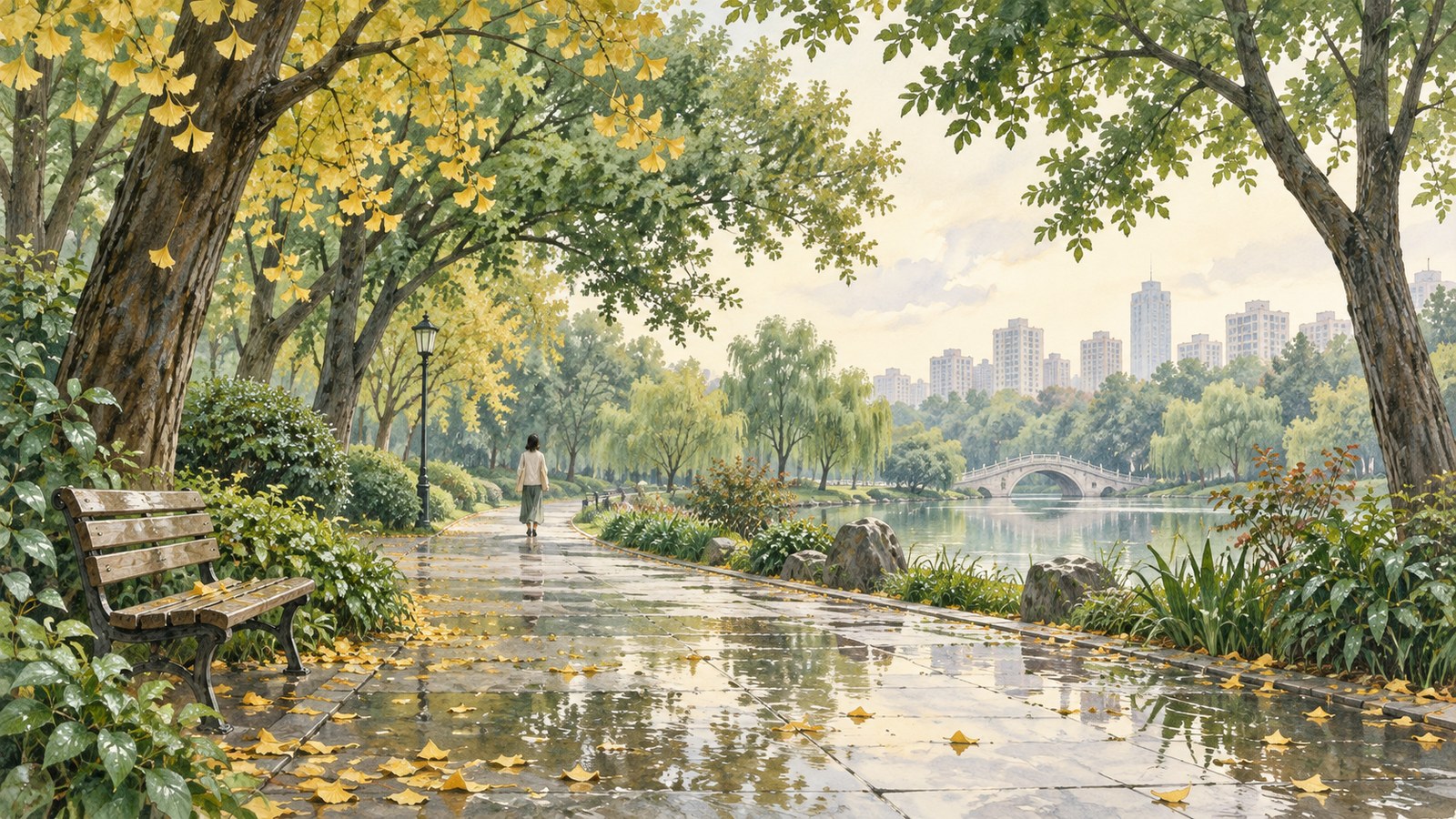
Making Room for Nature: Notice the World beyond the Screen
久在樊笼里,复得返自然。
Long confined within a cage, I return at last to nature.
——陶渊明,《归园田居·其一》;英文为本文译文
一天里,我们可能看了很多屏幕,却没有认真看过窗外的天色。消息一条接一条,任务做完一件又来一件,连走路时也在想着下一步。偶尔抬头,才发现路边的树已经换了颜色,而自己很久没有留意这些缓慢发生的变化。
We may spend a day looking at screens without noticing the sky outside. Messages and tasks keep arriving, and even while walking we think about what comes next. Then we look up and realize that the roadside trees have changed colour, a gradual change we had scarcely noticed.
陶渊明的《归园田居·其一》写归田后的生活与感受。“久在樊笼里,复得返自然”,有诗人自身的处境。今天借它谈日常生活,可以从附近的一点自然开始:一条有树的路,一小块天空,一段能够认真感受周围的时间。
Tao Yuanming's poem describes his life and feelings after returning to the countryside. The line belongs to his particular circumstances. For a contemporary reflection, begin with nearby nature: a tree-lined street, a small view of the sky, or a period in which you can attend to your surroundings.
一、把附近重新看见
Notice what is already nearby.
亲近自然不一定需要远行。住处附近的公园、街边的树、窗台上一盆植物,都可以成为观察的起点。看叶片的形状,留意光线怎样移动,听一会儿风声。熟悉的地方,也可能因为我们看得仔细,出现从前没有发现的细节。
You need not travel far to encounter nature. A local park, a street tree, or a plant on a windowsill can provide a starting point. Look at a leaf's shape, notice the movement of light, or listen to the wind. Familiar surroundings can reveal details when we give them closer attention.
如果所在环境不方便外出,也可以从自己的条件出发,在安全、舒适的位置看看远处,照料已有的植物,或打开窗帘观察一天中的天光。给自然留位置,可以很小,也可以慢慢调整,不需要拿别人的旅行照片来衡量自己的生活。
If going outside is difficult, work with your circumstances. Look into the distance from a safe, comfortable place, care for an existing plant, or observe daylight through the window. Making room for nature can be modest and adaptable, without measuring your life against someone else's travel photographs.
二、留一段不急着拍照的时间
Spend some time observing before recording.
看到好看的景色,想拍下来很自然。不过也可以在拍照之前,先给自己一分钟,只看眼前。树叶正在怎样晃动,阳光落在哪一处,空气与昨天有什么不同。没有急着寻找构图的时候,我们也许更容易感受到自己正在这里。
It is natural to photograph a lovely view. Before doing so, give yourself a minute simply to observe. How are the leaves moving? Where does the light fall? What feels different from yesterday? Without immediately searching for a composition, you may notice your own presence in the place more clearly.
照片可以留下纪念,感受也值得被保留。回家以后写一两句简单的记录:“今天看到树梢新长了几片叶子。”“雨后的路比平时明亮。”不需要写成漂亮的文章,准确描述一个小发现,就已经是一种认真生活的方式。
A photograph can preserve a memory, and an observation is worth keeping too. Later, write a simple note: new leaves appeared on a branch, or the path looked brighter after rain. It need not become polished prose. Describing a small discovery accurately is one way of attending to life.
三、把散步安排得温和而实际
Make an outdoor break practical and comfortable.
可以根据自己的身体状况、天气和时间,选择适合的路线与长度。刚开始,走到附近转一小圈就可以。准备合适的衣物,留意道路情况,也允许自己坐下来休息。一次舒服、能够再来的出门,比勉强完成很远的距离更适合日常。
Choose a route and duration suited to your health, the weather, and your available time. A short nearby walk is a reasonable beginning. Dress appropriately, pay attention to the path, and allow yourself to sit and rest. A comfortable outing you can repeat can fit everyday life better than a demanding distance.
如果和别人一起走,也可以提前说好这次不赶路。有人愿意聊天,有人想安静一会儿,都可以商量。自然里的相处,不必被安排得很满;共同看见一片云、一棵开花的树,也能够成为轻松的陪伴。
If walking with someone, agree that there is no need to hurry. One person may want to talk while another wants some quiet; discuss what suits you both. Time outdoors need not have a full programme. Noticing a cloud or a flowering tree together can offer easy companionship.
四、欣赏自然,也照顾公共空间
Care for the place you enjoy.
让环境保持舒服,需要每个人的一点配合。走在允许通行的地方,不随意折枝采花,把自己的垃圾带走,留意其他人的通行与安静。欣赏一片景色时,也想一想怎样让下一个来到这里的人,同样能够好好看见它。
Keeping a place pleasant requires small contributions. Use permitted paths, leave branches and flowers intact, take your rubbish away, and respect other people's movement and quiet. As you enjoy a view, consider how the next visitor can have an equally good opportunity to see it.
这些动作不需要大张旗鼓,却让喜欢有了具体的表达。照料一盆植物也是如此:了解它的需要,适量浇水,留意变化。我们在关注另一个生命的节奏时,也能够暂时从自己的忙乱里,抬起头来。
These actions give appreciation a concrete form without requiring attention from others. Caring for a plant works similarly: understand its needs, water appropriately, and observe changes. Attending to another living thing's rhythm can also give us a moment to look beyond our own busyness.
五、今天,记住一个季节的细节
Keep one small sign of the season today.
找一处方便、安全的地方,留意一个能够说清的细节。可以是一片叶子的颜色,一只鸟停留的位置,或者午后光线的方向。把它记下来,下周有机会再看一次。相同的地方有了时间的变化,日常也就多了一层可以体会的丰富。
From a convenient, safe place, notice one detail you can describe: a leaf's colour, where a bird landed, or the direction of afternoon light. Record it and look again next week if possible. Observing change in the same place adds another layer to ordinary life.
自然不必承担解决所有烦恼的任务,但它可以给忙碌的生活提供另一种观看的方式。我们愿意慢一点,看得细一点,也照顾好经过的地方。日子里的清新,有时就从这样一次普通的抬头开始。
Nature need not solve every worry to offer another way of looking at life. Move a little more slowly, notice a little more carefully, and care for the places you pass through. A sense of freshness can begin with the ordinary act of looking up.
原句出处:陶渊明《归园田居·其一》。本文借诗句作现代生活感悟,不把诗人的归隐经历直接等同于当代建议;英文为本文原创译文。
Source: Tao Yuanming, Returning to Dwell in Gardens and Fields, poem 1. The modern reflections do not equate the poet's withdrawal from official life with a recommendation for today's reader. The English translation and prose were written for this article.
继续阅读
有不同的想法,也能好好相处:从“和而不同”谈尊重 ↗温和,也能把事做好:从“上善若水”谈合作 ↗KEEP EXPLORING
沿着这个主题,再读几句。
The solutions all are simple - after you have arrived at them. But they're simple only when you know already what they are.
所有的解决方案都很简单——在你找到它们之后。但只有当你已经知道它们是什么时,它们才会变得简单。
If peace had a smell,it would be the smell of a library full of old, leather-bound books.
如果和平有一种气味,那一定是图书馆里满是皮面旧书的味道。
The scientist is not a person who gives the right answers, he is one who asks the right questions.
科学家不是一个给出正确答案的人,他是一个提出正确问题的人。