THE READING ROOM
节目单上的六个口袋
演员顺手抽出一封信,最后一排却有人独自叫好。一个姜黄色的口袋,让许苗在节目单付印前,找到了应当署名的那个人。
Six Pockets in the Program
本篇原创感悟
写下一个人的名字以前,先去听听她怎样讲自己做过的事。
Original reflection
Before you put someone’s name on the page, listen to how they describe the work they did.
那封终于抽出来的信 / The letter that came free
彩排到第三幕,台上的姑娘把手伸进紫外套,利落地抽出一封信。观众席里响起孤零零的一声“好”。喊好的是坐在最后一排的周姨。戏还没演到要紧处,负责排节目单的许苗回头看了她一眼。周姨倒有点不好意思,朝台上比画了一下抽信的动作,小声说,“这回没挂住。”
In the third act of rehearsal, the young woman onstage reached inside her purple jacket and pulled out a letter in one clean motion. A lone “Yes!” rose from the back row. The play hadn’t reached its big moment yet. Xu Miao, who was laying out the program, turned around. Auntie Zhou looked a little embarrassed. She mimed pulling out the letter. “It didn’t catch this time,” she whispered.
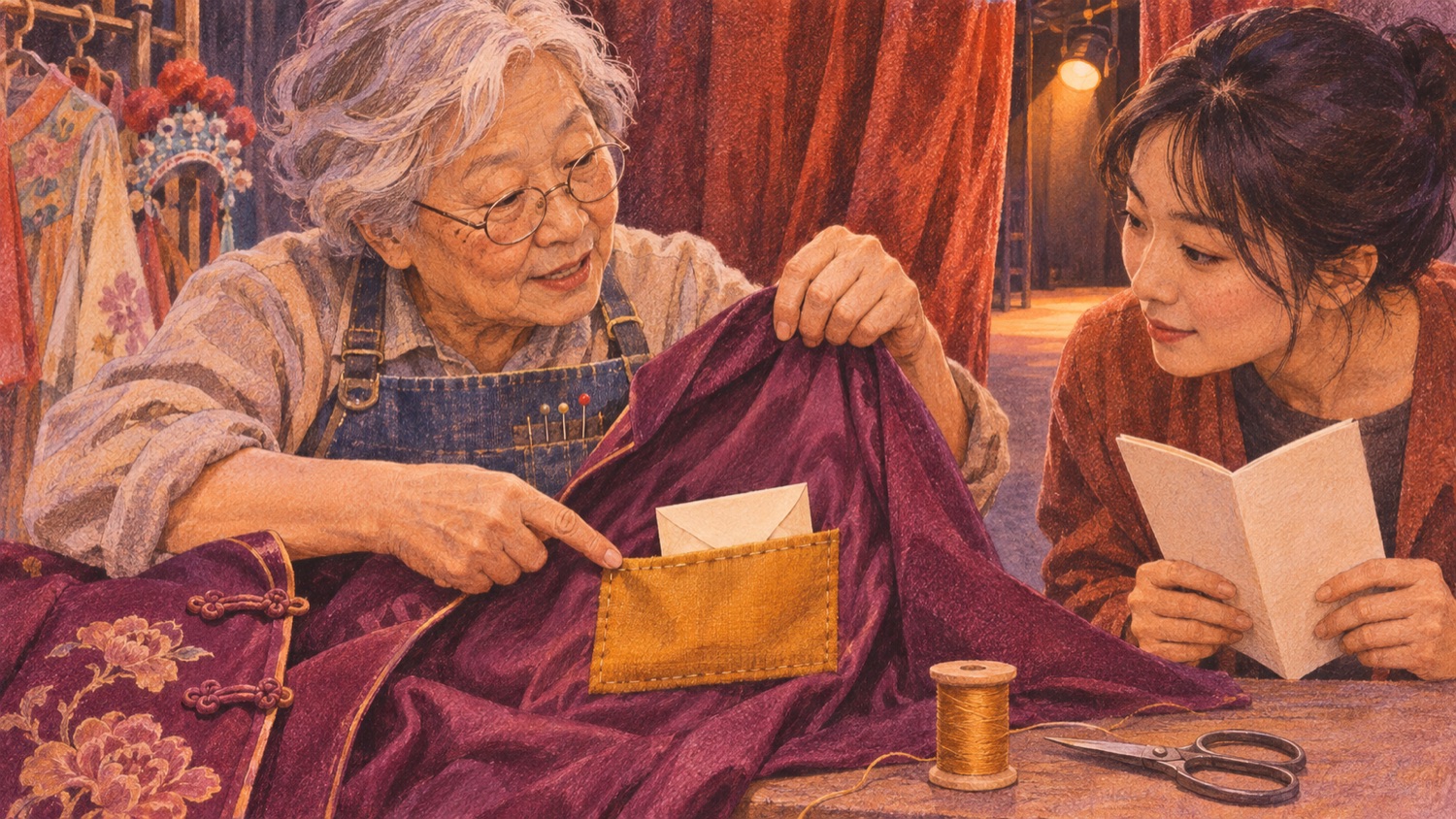
休息时许苗跟她到后台,才看见那件外套的里子。新缝的口袋是姜黄色的,比信封宽出两指。原先的袋口有点斜,演员一低头去找,就会错过同伴递过来的眼神。周姨让姑娘穿着外套试了三次,左手拿信,右手扣扣子,最后才定下袋口的方向。台上那一下,连一秒钟都没用完。
At the break, Xu followed her backstage and saw the jacket lining. A new ochre pocket was two fingers wider than the envelope. The old opening sat at an angle. Each time the actor looked down for it, she missed a glance from her scene partner. Zhou had her try the jacket three times, taking the letter with her left hand and buttoning up with her right, before settling on the angle. Onstage the movement took less than a second.
旁边的衣架上还有五件戏服,也动过口袋。有的要装一串叮当响的钥匙,有的只搁一张折起来的车票。周姨把每件都翻给她看,讲到最窄的那个时笑了,“这个拆第二遍的时候,我可没这么高兴。”许苗也笑了。她跟了两个月的排练,头一回听说一张车票还要试口袋。
Five more costumes hung on the rail, each with a pocket Zhou had altered. One held a jangling bunch of keys. Another held just a folded bus ticket. Zhou turned them inside out for her. At the narrowest pocket she laughed. “I wasn’t smiling when I unpicked this one for the second time.” Xu laughed too. She’d been at rehearsals for two months. She’d never heard of a bus ticket needing a fitting.
排版稿里少了谁 / Who was missing from the proof?
回到电脑前,许苗看了一遍节目单。演员姓名按出场顺序排好,灯光、音响各占一行。她当初是照着排练群里的分工表抄的,周姨来帮忙时表格已经填完了。许苗原先在末尾写的“感谢所有热心的朋友”,此时读来,谁也不会知道那六个口袋是一个人逐针缝出来的。
Back at her computer, Xu read through the program. The actors were listed in order of appearance. Lighting and sound had a line each. She had copied the rehearsal group’s task sheet, which was already filled in when Zhou came to help. Xu had added “Thanks to all our kind friends” at the bottom. A reader would never guess from those words that one person had sewn all six pockets, stitch by stitch.
许苗拿着校样去问周姨,愿不愿意在节目单上留个名字。她已经想好了“服装设计”四个字。周姨听了连连摆手,指着那件紫外套说,戏服的样式是剧团以前就定下的,衣服也是借来的,自己接手的只有口袋。她用指甲在纸边划了四个字,“戏服改制”。又找了支笔,端端正正写下姓名,周兰芝。
Xu took the proof to Zhou and asked if she’d like her name in the program. Xu had “Costume Design” in mind. Zhou shook her head and pointed at the purple jacket. The troupe had chosen the styles long ago, and the clothes were borrowed. The pockets were her part. With a fingernail she traced four Chinese characters along the margin. “Costume Alterations.” Then she found a pen and carefully wrote her name, Zhou Lanzhi.
如果你也要替一群人写活动小结,或者在台前介绍一件共同完成的作品,不妨在交稿前留出几分钟,顺着成品问一圈。谁改过最后那一道工序?分工表填好以后,还有谁接过临时的活儿?把准备采用的署名给本人看一眼。有人喜欢用全名,有人只想留个小组名称,这一行字由实际做事的人过目,写出来会更合适。
If you’re writing up a group event or introducing something people made together, leave a few minutes before the deadline to trace the work back. Who changed the last step? Who took on an extra job after the task sheet was filled in? Show people the credit you plan to use. Some prefer a full name. Others would use a team name. They can tell you which wording fits.
一张折起来的节目单 / A program folded in half
第二天开场前,印好的节目单放在入口。周姨拿起一张,先找那三个字。许苗有点紧张,怕自己把“芝”打成了“枝”。周姨读完,把纸对折,刚好把“戏服改制 周兰芝”露在外边。她说要带回家给老伴看,上星期两个人还为这些口袋拌过嘴,因为饭桌被她占了整整一个晚上。
The printed programs were by the entrance before the show the next day. Zhou picked one up and looked for the three characters of her name. Xu worried she might have typed the wrong character for Zhi. Zhou read it, then folded the paper so “Costume Alterations — Zhou Lanzhi” showed on the outside. She wanted to take it home to her husband. They’d squabbled about the pockets last week when she took over the dinner table for a whole evening.
到了第三幕,许苗站在侧幕后,看见信封的一角从紫外套里滑出来。姑娘的眼睛还望着同伴,这一回周姨也安安静静地看完了。散场后,演员把外套翻过来挂好,给她留了张便条,上面只有一句,“周老师,我今天摸着那个口袋就知道该抬头了。”
During the third act, Xu stood in the wings and saw the corner of the envelope slip out of the purple jacket. The actor’s eyes stayed on her scene partner. This time Zhou watched quietly to the end. After the show the actor hung the jacket up inside out and left Zhou a note. It read, “Ms. Zhou, tonight my hand found that pocket and I knew it was time to look up.”
周姨把便条塞进折好的节目单,披衣服回家。许苗留下来收拾,在电脑上把那份分工表重新打开。她把周兰芝的名字添在服装那一栏,旁边注明了是哪六件戏服。下次借衣服的人翻到这里,就知道找谁问那只装车票的小口袋。关灯时,衣架上的紫外套轻轻晃了晃,姜黄色的袋口还敞着。
Zhou tucked the note into her folded program, put on her coat and headed home. As she tidied up, Xu reopened the task sheet on her computer. She added Zhou Lanzhi’s name under costumes and listed all six garments. Whoever borrowed them next would know whom to ask about the little pocket for the ticket. When Xu turned out the lights, the purple jacket swayed on its hanger, its ochre pocket still open.
本文为优文网原创双语随笔,人物与场景为虚构。开篇感悟及译文均为本篇创作。
关于本文内容
本文由优文网站点维护者发布。近期原创双语随笔使用 AI 辅助起草、翻译和插画,发布流程包含中英对照、署名与页面校对。本站署名不代表专业资质;历史引文和译文仍可能有疏漏。
继续阅读
意见箱里的一条蓝鱼 ↗做一个让人放心的人:把诚信与担当放进日常小事 ↗KEEP EXPLORING
沿着这个主题,再读几句。
Through our willingness to help others we can learn to be happy rather than depressed.
通过我们乐于助人,我们可以学会快乐而不是沮丧。
There is no happiness for people at the expense of other people.
以牺牲他人为代价的人是没有幸福可言的。
The words of kindness are more healing to a drooping heart than balm or honey.
对一颗萎靡不振的心来说,善意的话语比香脂或蜂蜜更有疗效。